Here’s How the CEO of a $13 Billion Social Media Giant Manages Stress
Snap CEO Evan Spiegel tries to see stressful moments as a “gift.”
Key Takeaways
- Evan Spiegel is the CEO of Snap, a social media company with a most recent market value of $13 billion.
- In a recent interview, Spiegel said that he views stress positively, as a 鈥済ift鈥� and a 鈥渓earning opportunity.鈥�
- Other tech leaders, like Nvidia鈥檚 Jensen Huang, experience the stress of the CEO job more negatively.
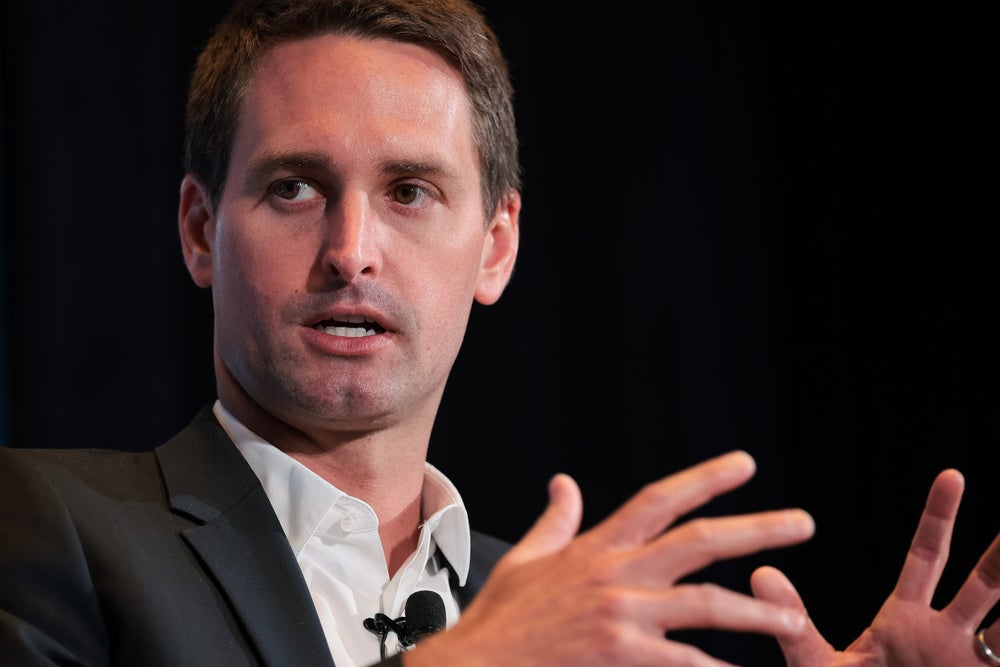
Snap CEO Evan Spiegel manages the pressure of running a social media company by reframing the way he thinks about stress and building habits that help him cope with it.
In a recent episode of the podcast, Spiegel said that he views stress positively, calling it a “gift” and a “learning opportunity.” A key part of Spiegel’s approach to stress is to act as a buffer rather than a transmitter of stress. He believes that it is his responsibility to absorb pressure for his team and family rather than unloading it on them. He doesn’t want colleagues or loved ones to feel the weight of his role.
To make that possible, Spiegel relies on practical routines, including regular exercise, sauna sessions and meditation, to manage stress privately. Those habits allow him to keep leading while maintaining emotional stability at home and at work.
Related: Employee Burnout Is a Multi-Million Dollar Hidden Cost For Employers, According to New Research
“I’ve tried to find my own ways,” he said on the podcast. “I want to absorb that stress, right? I don’t want to unload that onto people that I care about.”
Spiegel argued that what matters most is how a person frames stress in their own mind. Seeing stress as a positive growth opportunity can have a “huge impact on your ability to manage it,” he said.
Research backs up his claim. Stanford psychologist ‘s 2015 book, The Upside of Stress, claimed that viewing stress as a positive challenge rather than something harmful can improve work performance and resilience. This positive mindset became essential for Spiegel after years of high-profile decisions, from turning down in 2013 to in March 2017.
Related: Snap’s CEO Says This One Trait Is ‘the X Factor’ for 麻豆社s
Spiegel has been CEO of Snap for , so being CEO for the long haul has made him better at managing stress.
“Once you’re just in a rhythm of dealing with stressful events all the time, it becomes very normal,” he said on the podcast.
Other tech leaders have different responses to stressful situations. Nvidia CEO Jensen Huang, for example, said earlier this month that he lives in a constant “state of anxiety” that Nvidia is “30 days from going out of business,” even though the company is currently the most valuable in the world and of $57 billion for its third quarter last month. Huang said on the podcast that he works “every moment” he is awake and is “exhausted.”
Ready to explore everything on 麻豆社.com? December is your free pass to 麻豆社+. Enjoy complete access, no strings attached.
Key Takeaways
- Evan Spiegel is the CEO of Snap, a social media company with a most recent market value of $13 billion.
- In a recent interview, Spiegel said that he views stress positively, as a 鈥済ift鈥� and a 鈥渓earning opportunity.鈥�
- Other tech leaders, like Nvidia鈥檚 Jensen Huang, experience the stress of the CEO job more negatively.
Snap CEO Evan Spiegel manages the pressure of running a social media company by reframing the way he thinks about stress and building habits that help him cope with it.
In a recent episode of the podcast, Spiegel said that he views stress positively, calling it a “gift” and a “learning opportunity.” A key part of Spiegel’s approach to stress is to act as a buffer rather than a transmitter of stress. He believes that it is his responsibility to absorb pressure for his team and family rather than unloading it on them. He doesn’t want colleagues or loved ones to feel the weight of his role.
To make that possible, Spiegel relies on practical routines, including regular exercise, sauna sessions and meditation, to manage stress privately. Those habits allow him to keep leading while maintaining emotional stability at home and at work.


