Microsoft’s AI CEO Has a Strict In-Person Work Policy — Here’s Why
Microsoft AI CEO Mustafa Suleyman has stringent requirements for his team when it comes to in-office attendance.
Key Takeaways
- Microsoft will require employees to come into the office in person three times a week starting in February.
- However, Microsoft AI CEO Mustafa Suleyman already requires employees on his team to be in the office four times a week.
- Suleyman also prefers open floor plans, where employees sit at open desks grouped into “neighborhoods� of 20 to 30 people.
Microsoft recently mandated that employees come into the office in person three days a week starting in February 2026 — but for employees on Microsoft AI CEO Mustafa Suleyman’s team, working in person for most of the week is already the norm.
According to a released earlier this week from Business Insider, Suleyman requires employees on his team who live near an office to be there at least four days a week. Suleyman is the head of Microsoft AI, a division focused on Copilot and other consumer AI products and research. Executives who report directly to Suleyman must approve all exceptions to the in-office rule.
“I very much believe in the in-person working culture,” Suleyman told Business Insider, stating that it helps “defragment” teams and allows for collaboration.
Not only does Suleyman require employees to work from the office more than other Microsoft employees, but he also prefers open floor plans, where employees sit at open desks grouped into “neighborhoods” of 20 to 30 people. The arrangement is “much better for collaboration,” in Suleyman’s words.
“Everyone can see everyone else who’s in,” he told BI. “It just creates a lot more informal collaboration. It’s so much better.”
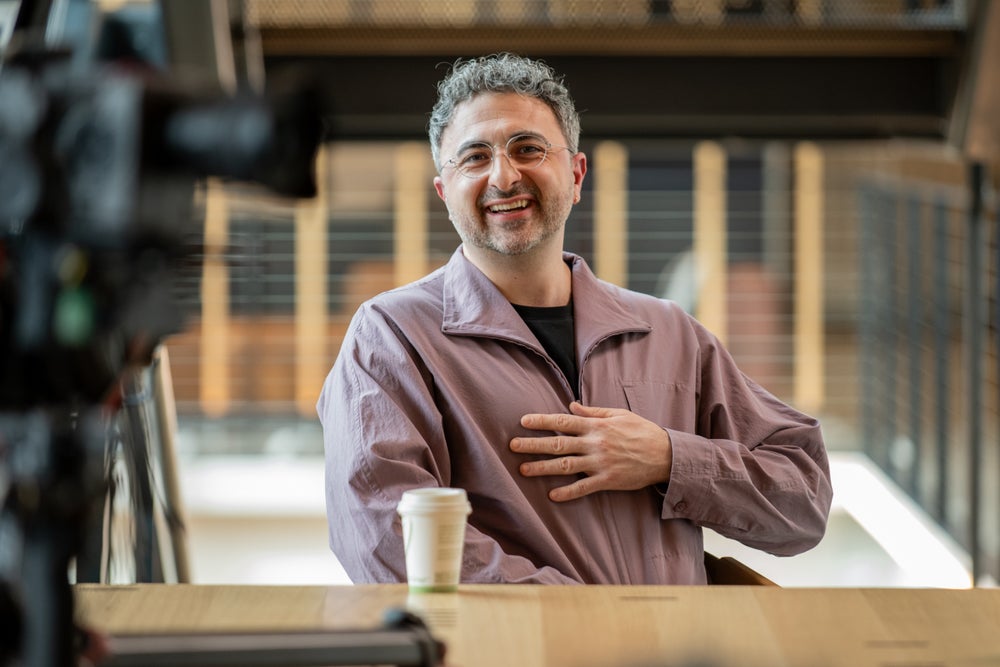
Most of Suleyman’s AI team at Microsoft is based in Silicon Valley rather than at the company’s Redmond, Washington headquarters. Suleyman himself splits his time between Silicon Valley and Redmond, emphasizing that there is “huge talent density” in Silicon Valley and describing it as “the place to be” for his work and team.
Related: This Is Where Â鶹Éçs Should Look for Business Opportunities in AI, According to Microsoft’s AI CEO
Other Microsoft teams outside of Suleyman’s that are working on AI have less strict in-person office mandates. The Cloud and AI group under Microsoft Executive Vice President (EVP) has no specific return-to-office requirements, while the CoreAI group under EVP will implement a three-day-a-week in-office guideline in February, per BI.
It’s unclear how many people are on Suleyman’s AI team, though leaked organizational charts show he had at least as of last month. Suleyman joined Microsoft in from Inflection AI, a AI startup he in March 2022. He was previously the co-founder of AI lab DeepMind, which Google for more than $500 million.
Last week, Microsoft that it will form a new superintelligence team under Suleyman tasked with conducting advanced AI research and developing AI smarter than the most intelligent human minds, in direct competition with Meta’s superintelligence group. Suleyman said that he wants Microsoft’s superintelligence team “to be the world’s best place to research and build AI.”
Key Takeaways
- Microsoft will require employees to come into the office in person three times a week starting in February.
- However, Microsoft AI CEO Mustafa Suleyman already requires employees on his team to be in the office four times a week.
- Suleyman also prefers open floor plans, where employees sit at open desks grouped into “neighborhoods� of 20 to 30 people.
Microsoft recently mandated that employees come into the office in person three days a week starting in February 2026 — but for employees on Microsoft AI CEO Mustafa Suleyman’s team, working in person for most of the week is already the norm.
According to a released earlier this week from Business Insider, Suleyman requires employees on his team who live near an office to be there at least four days a week. Suleyman is the head of Microsoft AI, a division focused on Copilot and other consumer AI products and research. Executives who report directly to Suleyman must approve all exceptions to the in-office rule.
“I very much believe in the in-person working culture,” Suleyman told Business Insider, stating that it helps “defragment” teams and allows for collaboration.


