14 Things You Need to Know About Bitcoin
The cryptocurrency has had a tumultuous existence so far.

Even the most tech savvy among us have a wrapping their heads around Bitcoin. It’s a hot topic and a frequent point of discussion among investors, entrepreneurs and stock traders, so you should want to know all about it.
For starters, here’s an overly simplified explanation of Bitcoin: It’s a digital currency (there are ) that isn’t controlled by a central authority such as a government or bank. It’s created by “miners,” who use computers and specialized hardware to process transactions, secure the currency’s network and collect bitcoins in exchange. Supporters say it allows for more secure transactions over the internet. That’s in part due to blockchain, a technology that records cryptocurrency transactions chronologically in a public digital ledger.
 Ulrich Baumgarten | Getty Images
The birth of Bitcoin
The trace back to , when its creator, who went by the pseudonym Satoshi Nakamoto, published a for Bitcoin. The proof was then published to a cryptocurrency mailing list in 2009. Nakamoto left the project in 2010 and disappeared, but other developers picked up the work. Bitcoin’s birthday is Jan. 3, when Nakamoto of the currency.
 Jonathan Alcorn | Getty Images
An elusive creator
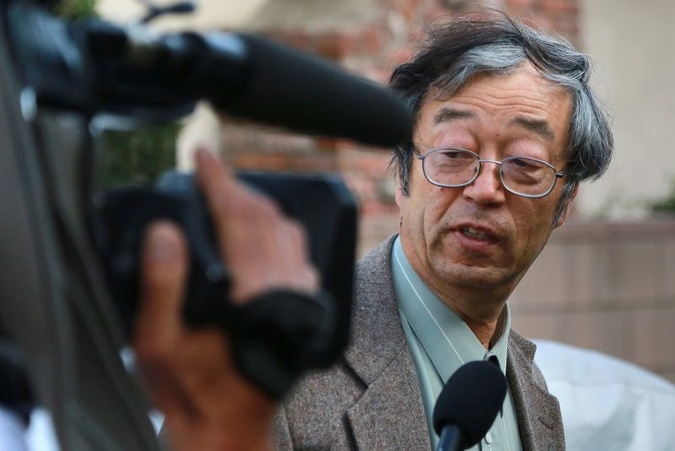
The true identity of Bitcoin’s creator has never been confirmed. to have found Bitcoin’s creator in 2014, identifying Temple City, Calif., resident Dorian Satoshi Nakamoto. He has vigorously denied it. In 2015, an Australian entrepreneur named said he was Bitcoin’s creator, but he couldn’t produce the evidence to support his claim. Whoever Nakamoto is, that person is very rich, as the creator is estimated to have in the currency’s early days.
Related: 5 Essential Podcasts for 麻豆社s Serious About Cryptocurrency
 Michael M枚ller | EyeEm | Getty Images
Very expensive pizza
The first transaction involving bitcoin was reported on May 22, 2010, when a programmer identified as Laszlo Hanyecz said he “.” As of Nov. 28, 2017, 10,000 bitcoins are worth about $99 million.
 Christopher Morris | Corbis | Getty Images
You can spend bitcoins
While it may not seem like it, people continue to use bitcoins to buy stuff. The largest businesses to accept the cryptocurrency include , , and .
 ROSLAN RAHMAN | AFP | Getty Images
Federal Bureau of Bitcoin
At one point, the U.S. government was one of the . In 2013, after the FBI shut down Silk Road, a darknet site where people could buy drugs and other illicit goods and services, it took over bitcoin wallets controlled by the site, one of which held 144,000 bitcoins. Investors have been by bidding on government-seized bitcoins.
 Chris Ratcliffe | Getty Images
A mountain-sized setback
In early 2014, Bitcoin suffered a devastating loss after the , a Japanese exchange. About $460 million of the currency (in 2014 value) was stolen. It was the largest loss of bitcoins ever and raised concerns about how secure the currency was.
 Paul Morigi | Getty Images
The billionaires’ takes
Warren Buffett, perhaps the most famous investor in the world, was not so keen on Bitcoin one of the only times he addressed the currency. “Stay away from it. It’s a mirage, basically,” . “The idea that it has some huge intrinsic value is a joke in my view.”
Fellow billionaire investor Jamie Dimon, chief executive of JPMorgan Chase, had even about Bitcoin: “You can’t have a business where people are going to invent a currency out of thin air. It won’t end well 鈥� someone is going to get killed and then the government is going to come down on it.”
But not all are against Bitcoin. Mark Cuban has said its value is inflated, but he recently . Richard Branson, however, has spoken more about it.
Related: 21 Surprising Facts About Warren Buffett
 David Livingston | Getty Images
Super wealthy twins and a smart teen
Other include Cameron and Tyler Winklevoss (the Harvard-educated twins who sued Mark Zuckerberg claiming that Facebook was based on an idea they’d had). They bought $11 million worth of Bitcoin in 2013, an amount said to be about 1 percent of all bitcoins in circulation at that time. When Bitcoin’s value reached more than $11,000 in early December, the twins were declared the first . The Winklevoss twins have been petitioning the SEC to create a . The agency rejected the idea earlier this year.
 Stefan Hoederath | Redferns | Getty Images
Celebrities want in
 Nicholas Pfosi | Getty Images
Support from a big financial institution
In August 2017, Fidelity Investments became a rare standout among financial institutions in embracing Bitcoin and other cryptocurrencies. The company allows its clients to use the Fidelity website to held through digital wallet provider Coinbase. “This is an experiment in the spirit of learning what these crypto assets are like and how our customers may want to interact with them,” Hadley Stern, senior vice president and managing director at Fidelity Labs, told Reuters.
Related: 10 Pieces of Financial Advice I Wish I Knew in My 20s
 Sean Gallup | Getty Images
A hard fork
On Aug. 1, 2017, Bitcoin experienced what’s being called a “hard fork” as a result of a few issues, including the limited number of transactions that can be processed per second. Essentially, the cryptocurrency split into two, with debuting. Here’s how Rob Marvin of PCMag explains the situation: “The Bitcoin fork speaks to a fundamental ideological rift over what’s more important: preserving the decentralized nature and independent control of the Bitcoin network, or accelerating transaction speeds to make the cryptocurrency more viable for mainstream ecommerce and payments.” Bitcoin Cash and more transactions per second.
 Shutterstock.com
Jaw-dropping
At the end of November 2017, Bitcoin’s value reached toward $10,000 per unit. There are some 16.7 million Bitcoin units in circulation, and the cryptocurrency’s ($167,156,585,840 as of Nov. 28, 2017) is actually higher than that of Disney, McDonald’s or IBM, and it is slightly above that of GE.
 Shutterstock.com
Publicly traded
As of early December, there is another way to invest in Bitcoin without possessing some of the digital currency. On Dec. 10, 2017, — “financial contracts obligating the buyer to purchase an asset or the seller to sell an asset,” according to — became available on Cboe, a Chicago exchange. What this means for the future of Bitcoin is uncertain, but some argue it will help stabilize the cryptocurrency’s wild price fluctuations.
 Bloomberg | Getty Images
The hidden cost of Bitcoin.
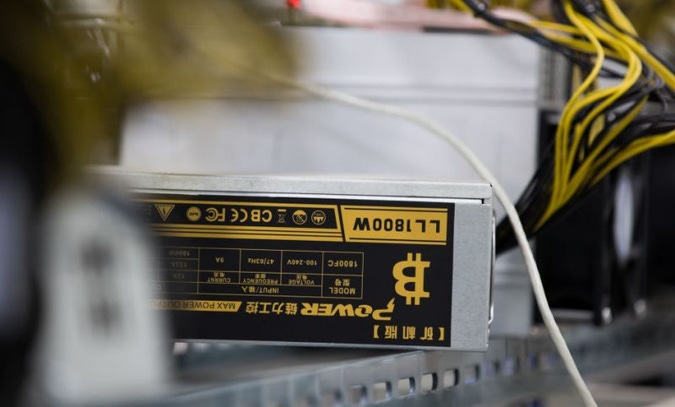
The process to create bitcoin, called mining, is an energy intensive process, with many of the miners using for the process. This computing power has added a burden to energy systems around the globe, and in some countries, such as China, those systems still are powered by coal.
PowerCompare, a U.K.-based energy comparison tariff service, that Bitcoin mining consumes more electricity than 159 countries, including Ireland and most countries in Africa.
Power consumption for all cryptocurrencies is on track to use more electricity in 2018 than the whole of Argentina, according to .
Even the most tech savvy among us have a wrapping their heads around Bitcoin. It’s a hot topic and a frequent point of discussion among investors, entrepreneurs and stock traders, so you should want to know all about it.
For starters, here’s an overly simplified explanation of Bitcoin: It’s a digital currency (there are ) that isn’t controlled by a central authority such as a government or bank. It’s created by “miners,” who use computers and specialized hardware to process transactions, secure the currency’s network and collect bitcoins in exchange. Supporters say it allows for more secure transactions over the internet. That’s in part due to blockchain, a technology that records cryptocurrency transactions chronologically in a public digital ledger.
The birth of Bitcoin
The trace back to , when its creator, who went by the pseudonym Satoshi Nakamoto, published a for Bitcoin. The proof was then published to a cryptocurrency mailing list in 2009. Nakamoto left the project in 2010 and disappeared, but other developers picked up the work. Bitcoin’s birthday is Jan. 3, when Nakamoto of the currency.


